








Bar Admission 2002

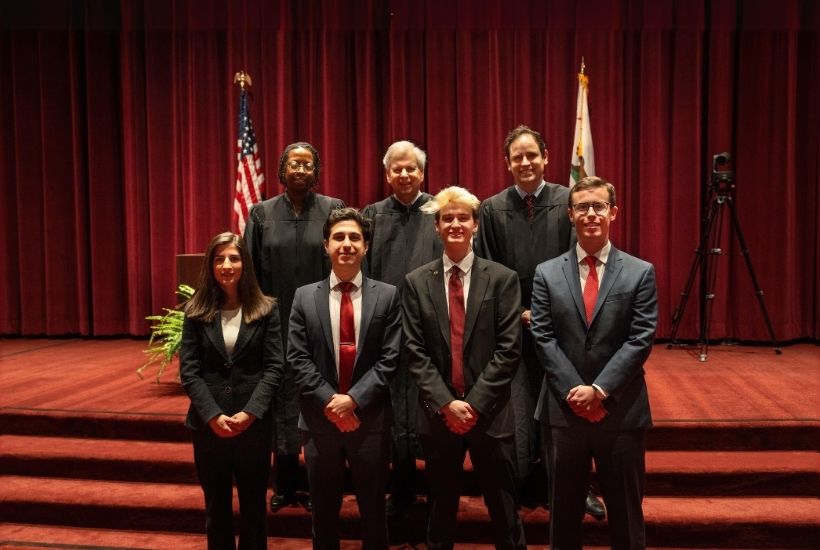
Justice Paul Boland '66 is an associate justice on the California Court of Appeal and a former Los Angeles County Superior Court judge. He gave the following speech at the USC Law Bar Admission Ceremony on Dec. 9, 2002.

Dean Spitzer, thank you for your invitation to return to my alma mater to participate in your celebration, and to share the occasion with my friend and colleague, Judge Stephen Larson.

Before administering the oath that will admit you to the profession for which you have been so superbly trained, permit me to share some thoughts about the opportunities and challenges that await you.

You recently graduated from one of the nation's finest law schools. And you just successfully completed one of the most rigorous bar examinations in the country. These achievements, however, are merely preludes to an exciting and fulfilling professional career.

You will derive enjoyment from various facets of the practice of law --from helping a client find solutions to a problem, to providing quality representation to a client, to winning a case. But that enjoyment will pale in comparison to the professional satisfaction you will experience when you reach beyond the confines of your firm and use your legal training and lawyering skills to improve the community. Whether you choose to become involved in a bar association, a legal services program or a community-based organization, involvement outside of work will teach you about the diversity, the complexity and the vastness of Los Angeles. More importantly, it will allow you to contribute to shaping solutions to the issues that concern and affect the broader community.

A more critical time for lawyers to assume a leadership role in the community is difficult to imagine. The events of the recent past remind us of the core values that bind this nation. They remind us as well of the central role performed by the justice system in protecting those values -- concepts such as equal justice under law for persons of all races, ethnicities and skin colors, and commitment to civil rights and civil liberties, even in a time of war. The community needs to be able to think about and discuss these issues in a rational manner, and lawyers are specially equipped to assist in this important endeavor.

In the history of this great city, lawyers have been at the center of virtually all of its defining events. Lawyers led the McCone Commission, formed in the wake of the Watts Riots, to explore the community's response to race and violence. Lawyers led the Christopher and the Kolts Commissions as they investigated and worked to improve the relationship between the police and the residents of Los Angeles. More recently, lawyers stood at the forefront of efforts to stem the systematic abuses within law enforcement that led to the Rampart Division scandal. The kind of community leadership displayed by those lawyers in needed today, and will be needed in the years to come.

In those years, various pressures will test your resolve and ability to make community service a part of your professional lives. They will be financial, professional and personal. Many lawyers today feel they lack the time to be actively involved in their community. If they work in a firm, they worry about client generation, billable hours, partnership and the bottom line. If they practice alone, they worry about meeting the overhead, supporting the family, and finding time to relax and catch their breath.

Practicing law is sufficiently time-consuming, stressful and economically challenging that it is easy to forget that law is fundamentally about service -- helping people access the court system, securing needed court services, and protecting important legal rights. So I urge you to commit yourselves to serving your community, whether you devote your energies to pro bono work, educating the public about the justice system, or participating in some other community-oriented endeavor.

I offer these thoughts, not to dwell upon the negative at a time of celebration, but to suggest that, from this day forward, you will play an important role in determining the function that law and lawyers will perform in our society during your legal careers. Maintain your enthusiasm, not just for the practice of law, but for the profession of the law. Be active in addressing not only your client's problems, but the real and complex problems we face in this community and this nation.

Do these things and you will look back, as Judge Larson and I do, years later, and take pride in the realization that you endeavored to make a difference. You also will realize that, through the collective efforts of others like you, things did change -- not always with the speed you envisioned -- but in ways that made the community and the profession better than they were. And you will feel that the time and effort spend earning your law degree was well worth it, because it enabled you not only to do your best for your individual clients, but to involve yourself in the life of your community and contribute substantively to addressing its needs and concerns. That is the ultimate calling of every lawyer, and that is the calling to which we welcome you today.